GRC Jali: Complete Guide to Material, Types, Weight & Price (2026)
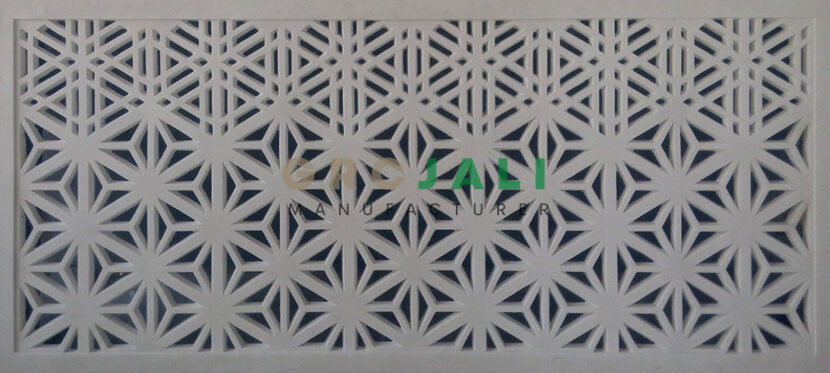
GRC jali is a perforated decorative screen cast from glass-fibre reinforced concrete. It does what a carved stone jaali has always done in Indian buildings: it filters sunlight, lets air through and gives privacy. But it is a fraction of the weight, costs much less and can be fixed to an ordinary RCC or brick frame. This guide covers what GRC is, how a jali is made, the types and sizes available, weights, prices in 2026, installation and upkeep, and how GRC compares with stone, RCC and FRP.
GRC full form and meaning
GRC stands for Glass-fibre Reinforced Concrete. It is also written GFRC (Glass Fibre Reinforced Concrete); the two names mean the same material. Jali (or jaali) is the Hindi and Urdu word for a perforated lattice screen. So a GRC jali is a lattice screen made from glass-fibre reinforced concrete.
The term turns up in a few contexts:
- GRC full form in civil engineering: Glass-fibre Reinforced Concrete, a precast cement composite used for façades, cladding, jali, columns and other architectural elements.
- GRC in hotel construction: the same material, widely used for hotel façades, lobby screens, domes and cornices. Note that in hotel operations “GRC” more often refers to a Guest Relations role, which has nothing to do with the building material.
- Not to be confused with: FRP (fibre-reinforced plastic, a resin product), RCC (reinforced cement concrete, which uses steel bars) or FRC (any fibre-reinforced concrete, often with polypropylene or steel fibres).
What is GRC made of?
GRC is a dense, fine-grained mortar reinforced with glass fibre instead of steel. A typical mix contains:
- Cement: grey or white Portland cement, sometimes with pigment for colour through the body.
- Fine silica sand: graded and washed, so the surface picks up fine detail from the mould.
- Alkali-resistant (AR) glass fibre: glass with at least 16% zirconia (ZrO₂), which survives the alkaline environment inside cement. Ordinary E-glass fibre does not, and loses its strength over time.
- Water and admixtures: a superplasticiser for workability at a low water-cement ratio, and often an acrylic polymer that helps curing and reduces surface cracking.
Because the fibres are spread through the whole section, there is no steel cover to maintain. That is why GRC can be cast 10–50 mm thick, where an RCC element needs 50–75 mm or more. Read more in what is GRC and glass fibre reinforced concrete.
How a GRC jali is made
- Pattern and master: the design is drawn in CAD and CNC-cut or hand-carved as a master.
- Mould: a flexible rubber or rigid fibreglass mould is taken from the master. One mould casts many identical panels.
- Casting: most jali is premix GRC, with 2–3.5% chopped AR fibre blended into the mortar, poured or vibrated into the mould. Large thin façade panels use spray-up GRC, with 4–5% fibre sprayed in layers. Spray-up is about twice as strong in bending.
- Curing: panels are demoulded after about a day and cured moist, or with a polymer admixture, so the cement gains full strength.
- Finishing: edges are dressed, then the panel is left natural, sealed or painted.
Properties of GRC
| Density | About 1.9–2.1 tonnes per m³ |
|---|---|
| Flexural strength (28 days) | 10–14 MPa premix; 20–30 MPa spray-up, tested to EN 1170-5 |
| Compressive strength | Typically 50–80 MPa |
| Fibre | AR glass, ≥ 16% ZrO₂; 2–3.5% by weight (premix), 4–5% (spray-up) |
| Fire | Non-combustible |
| Corrosion | None; there is no steel reinforcement |
| Typical jali thickness | 25–50 mm (3D jali 50–100 mm) |
Types of GRC jali
- Modern GRC jali: triangles, hexagons, linear slats, Voronoi and parametric patterns, often used as a second skin in front of glazing.
- Traditional GRC jali: Mughal star-and-polygon geometry, floral trellis, Moroccan quatrefoil and arched jharokha panels, for temples, heritage hotels and farmhouses.
- 3D GRC jali: deeper relief patterns that throw strong shadows; thicker and heavier.
- Custom GRC jali: a new pattern from your drawing, logo or motif, with its own mould.
- By use: elevation screens, balcony jali, staircase and shaft screens, boundary wall jali, interior partition jali, and screens to hide AC units and ducts.
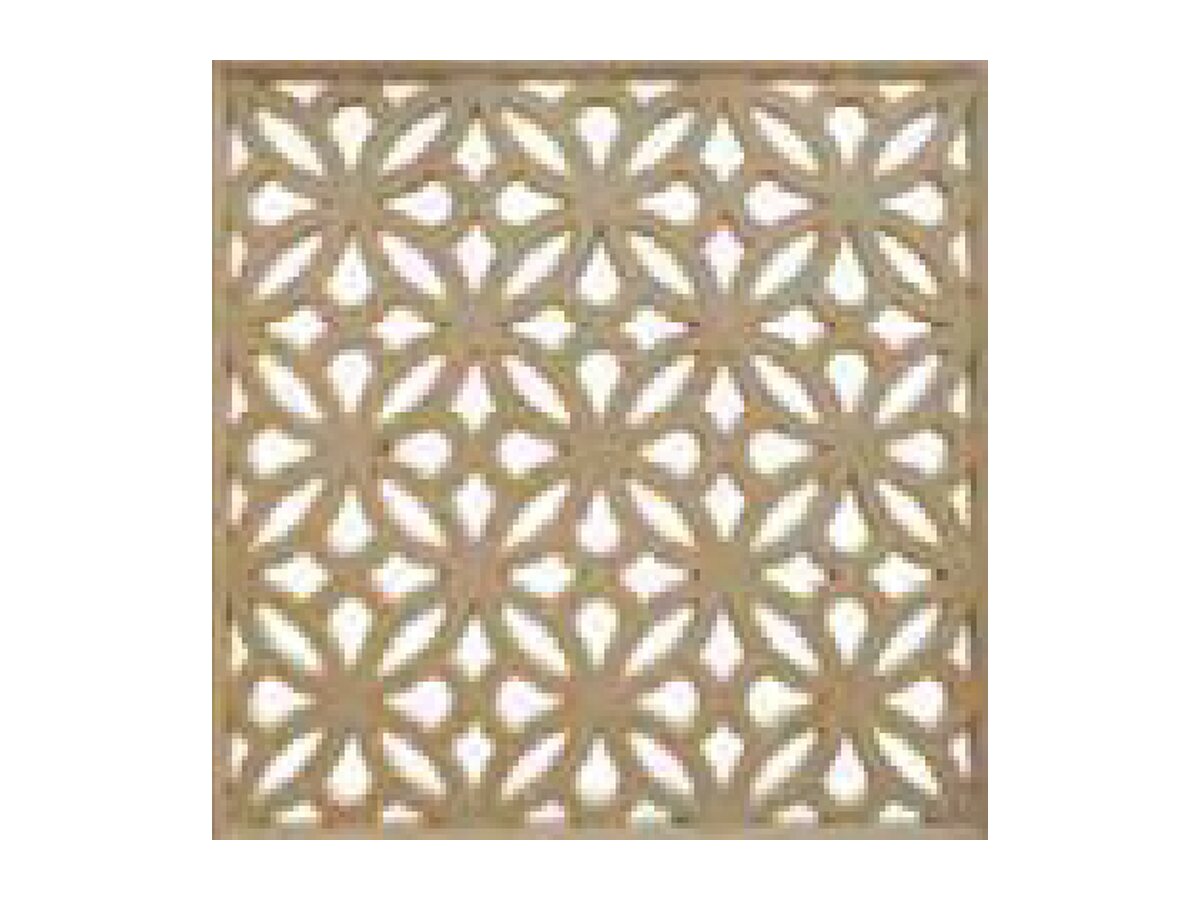
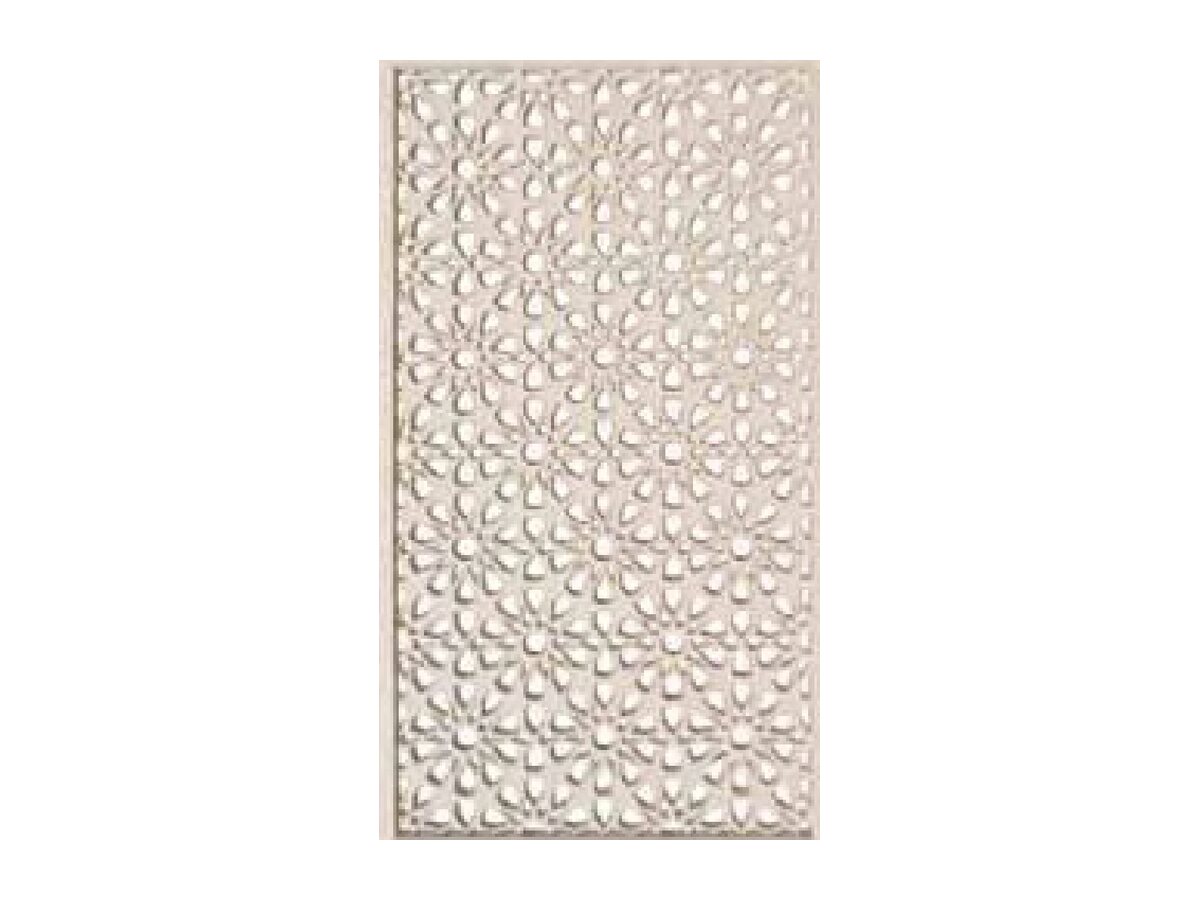
Browse 70+ GRC jali designs with codes and prices, for example:
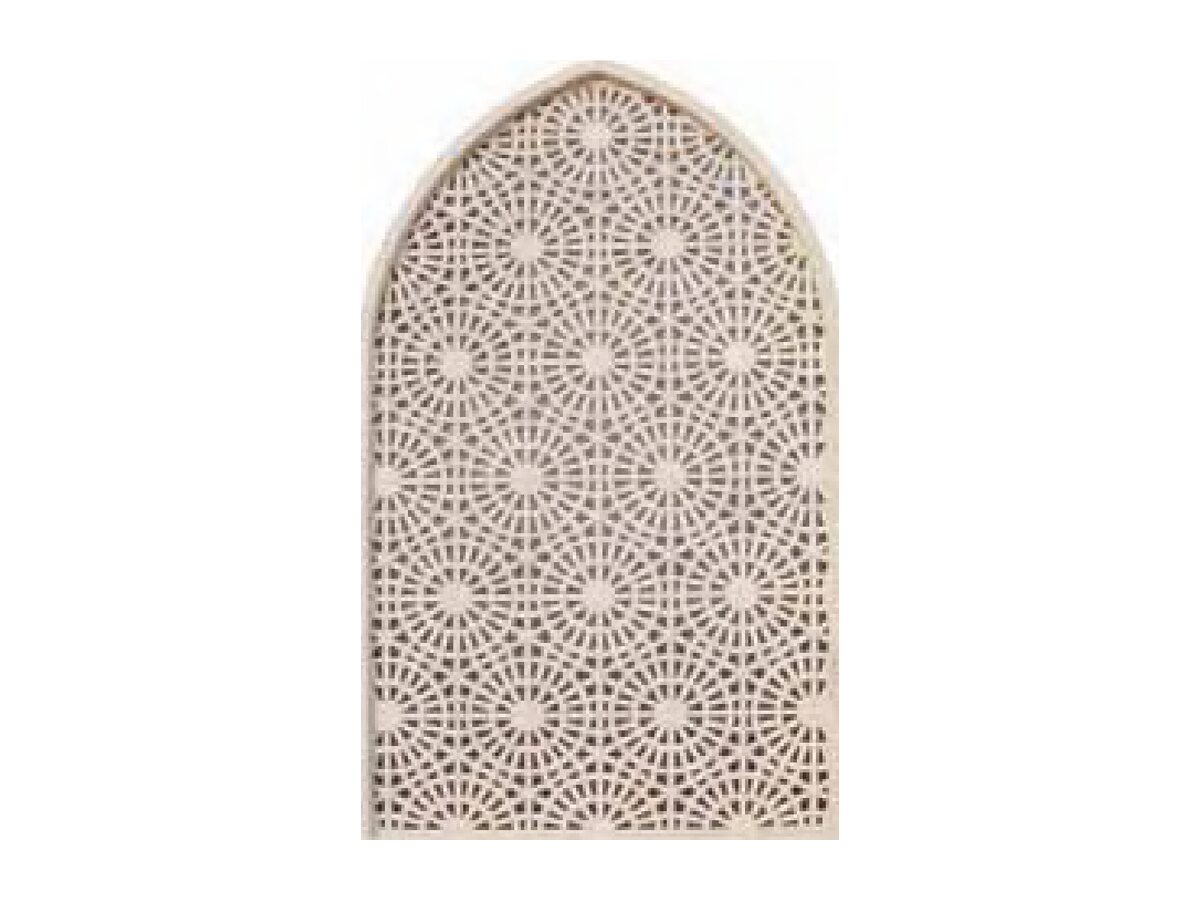
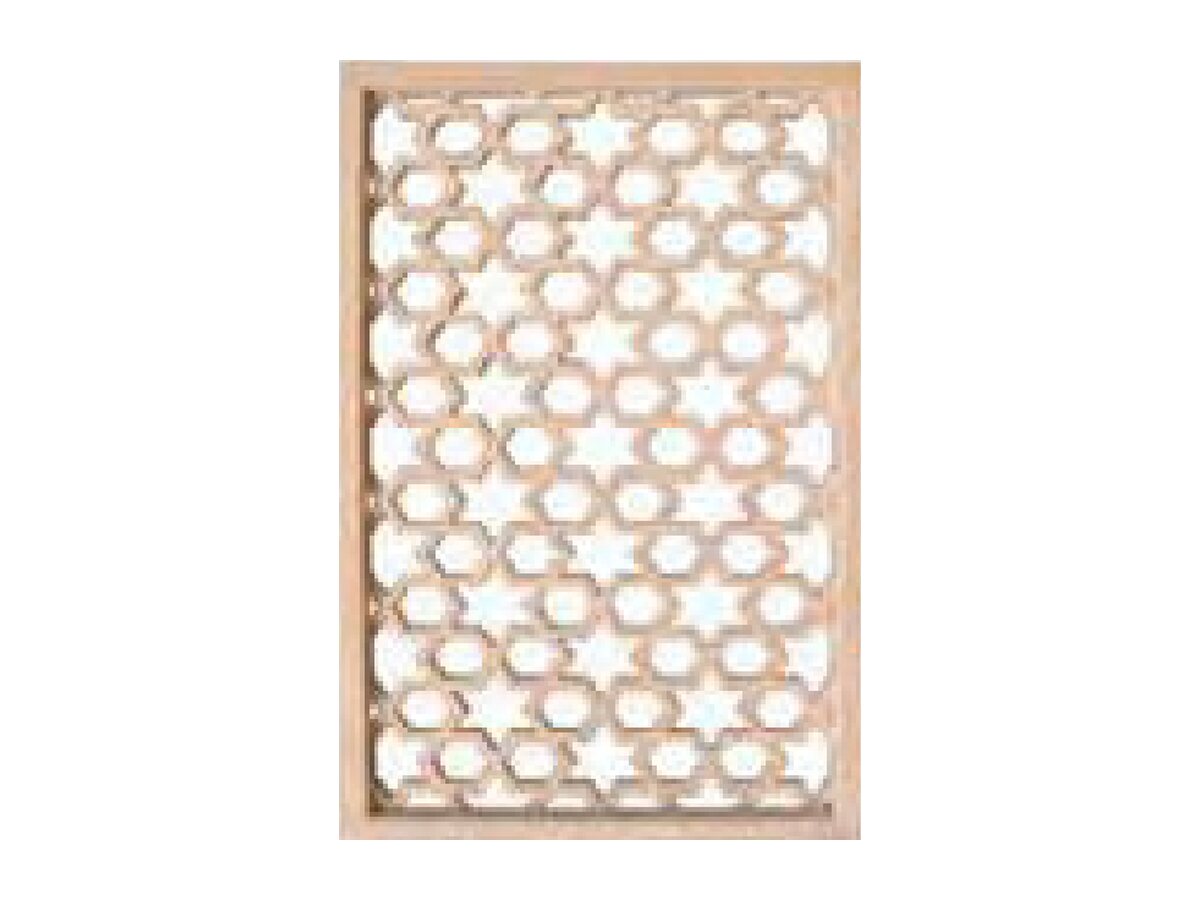
Sizes, thickness and weight
Standard jali modules range from 600 × 600 mm to 1200 × 1800 mm (2′ × 2′ to 4′ × 6′). Bigger panels are possible, but handling and fixing get harder above about 2 m². Openings that do not match a module are filled with cut or specially cast panels. Approximate weights for a jali with about 35% open area:
| Thickness | Weight per sq ft | Typical use |
|---|---|---|
| 25 mm | ≈ 3.0 kg | Interior partitions, small screens |
| 30 mm | ≈ 3.6 kg | Balconies, elevation screens |
| 40 mm | ≈ 4.8 kg | Larger elevation panels |
| 50 mm | ≈ 6.0 kg | Boundary walls, heavy-duty and traditional jali |
| Solid panel, 12–20 mm | ≈ 2.2–3.7 kg | Wall panels and cladding |
GRC jali vs stone, RCC and FRP
| GRC | Natural stone | RCC / cement | FRP | |
|---|---|---|---|---|
| Typical section | 25–50 mm | 50–75 mm | 50–75 mm | 3–6 mm skin |
| Reinforcement | AR glass fibre, nothing to rust | None | Steel bars, can rust and spall | Glass fibre in resin |
| Weight | Light | Heavy | Heavy | Very light |
| Fire | Non-combustible | Non-combustible | Non-combustible | Combustible unless fire-retardant resin is used |
| Sun and weather | Stable; colour runs through the body | Stable; may erode or stain | Cracks where steel corrodes | Resin can yellow and chalk |
| Detail | Fine, every panel identical | Fine, but hand-carved, slow and costly | Coarse | Fine |
| Relative cost | Medium | High | Low to medium | Low to medium |
In short: choose stone where authenticity matters more than budget or weight, FRP for light interior décor, and GRC for exterior jali that has to last, look sharp and stay affordable.
GRC jali price in 2026
In India, GRC jali typically costs ₹250–₹450 per sq ft for standard catalogue designs, rising to ₹350–₹700 per sq ft for 3D relief and custom moulds. These are supply-only rates before 18% GST, reviewed in October 2026. The price depends on:
- Design: an existing mould is cheapest; a new mould is spread over the quantity ordered.
- Thickness and pattern depth: more material means more cost.
- Quantity: large repeat orders cost less per sq ft.
- Finish: white cement, pigment, sealer or paint.
- Extras: installation, MS or SS frames, scaffolding and freight to site.
See the full price table by product, or get an instant estimate with GST from the GRC jali cost calculator.
Where GRC jali is used
- Homes and builder floors: front elevations, balconies, staircase windows and terrace screens.
- Commercial buildings: double-skin façades that cut glare and heat gain on glazing.
- Hotels and resorts: lobby screens, corridors and pool areas.
- Religious buildings: temples, gurudwaras, mosques and dargahs.
- Institutions: schools, hospitals and government offices, where low maintenance matters.
- Services: screens over AC outdoor units, ducts and shafts that still need airflow.
A jali also does real climate work. It shades walls and windows from direct sun while letting breeze through, which is why the jaali has been part of Indian architecture for centuries.
Installation
- Into RCC or masonry: panels sit in a rebate or on a ledge and are held with stainless or galvanised steel dowels and anchors.
- On a frame: large screens and façades hang on an MS (galvanised or painted) or SS frame bolted to the structure.
- Joints: filled with a flexible sealant or polymer mortar, never rigidly grouted on all sides, so the panel can move with temperature.
- Plan early: leave openings to the panel layout drawing, and fix inserts before plastering, to avoid cutting panels on site.
Maintenance
GRC needs very little care. Wash it with water and a soft brush once or twice a year. Re-apply a breathable, water-repellent sealer every three to five years in dusty or coastal areas. Painted jali is repainted like any exterior wall. Avoid acid cleaners, which etch cement surfaces.
Mistakes to avoid when buying
- Buying “GRC” that is really cement with a little fibre, or made with E-glass fibre. Ask for the AR fibre datasheet.
- Comparing rates without checking thickness, GST, installation and freight.
- Choosing a pattern from a photo without checking its open area, which decides how much light and air gets through.
- Fixing panels with cement mortar alone, without mechanical anchors.
Other GRC products, in brief
- GRC panels and GFRC panels: solid precast panels, 10–20 mm, for walls, partitions and feature walls.
- GRC cladding: thin panels on a steel frame forming the outer skin of a building.
- GRC sheets and tiles: small flat or textured GRC units for décor and screening.
- Architectural elements: columns, capitals, cornices, domes, arches and planters. See all GRC products.
Frequently asked questions
What is the full form of GRC?
Glass-fibre Reinforced Concrete. GFRC, Glass Fibre Reinforced Concrete, is another name for the same material.
Is GRC jali strong enough for exterior use?
Yes. Made with AR glass fibre and fixed with steel anchors, GRC jali is designed for exposed elevations. It withstands sun, rain and heat, and has no steel to rust.
What is the difference between GRC and FRP jali?
GRC is a cement product: heavier, non-combustible and stable in sunlight. FRP is a resin product: very light, but combustible unless fire-retardant, and it can yellow and chalk outdoors. GRC is the better choice for exteriors.
How much does GRC jali cost per sq ft?
About ₹250–₹450 per sq ft for standard designs and up to ₹700 for custom or 3D work, supply-only and before GST (October 2026).
Can GRC jali be painted or coloured?
Yes. It can be pigmented through the mix (white, beige, sandstone red and so on) or painted with exterior acrylic or textured paint after installation.
How long does it take to make?
Usually 15–30 working days after the drawing is approved, longer if a new mould is needed.
Planning a GRC jali?
Asian GRC has designed, cast and installed GRC jali since 2012. Send your sizes and the designs you like on WhatsApp or call +91 98130 29009, or read more about us as a GRC jali manufacturer.
